
The odd-sounding combination of coal merchant and bistro owner was quite common in Paris during the late 19th and early 20th centuries. These establishments were usually the métier of immigrants from the Auvergne and northern Aveyron, where the poor soil made farming a thankless task.
Rural exodus
The depopulation of rural France during the 20th century is well documented. Perhaps less well known is that this exodus began during the 19th century. The arrival of the train was partly responsible.
The mountainous areas of les Monts du Cantal and the Aubrac were virtually inaccessible to the railways, which spread across the land in the 19th century. Farmers who lived near railway towns benefited from the new fertilisers, brought by train, to enrich their soil and specialise in certain products, such as wheat. Subsistence farming, which had persisted for centuries, began to break down. In the more remote areas, farming was less and less profitable. In addition, the old cottage industries, such as weaving, also became less sustainable, as the trains brought cheaper, factory-produced textiles.

Auvergnats & Aveyronnais move to Paris
Farmers from these areas began to up sticks and move to the towns, particularly Paris, in search of work. By 1879, there were around 700 Auvergnats/Aveyronnais in Paris, who settled mostly in the 11th arrondissement, around la Bastille. By the end of the century, the stream had become a flood.
To begin with, the rural immigrants often worked as water carriers for the public baths. But, as the Parisian water supply network developed under Haussmannian urban development, they changed métier. Increasingly, they turned to wood and coal delivery, the latter probably because of their links with the mining towns of the Auvergne and northern Aveyron. At this point, they started to be referred to as bougnats, probably from the Auvergne dialect word for a charcoal burner, charbouniat.

Close-knit community
At the same time, many of them opened cafés. The husband would deliver the coal, while the wife served drinks and sometimes meals, under the sign Vins et Charbon (wine and coal). Some of the most famous Parisian cafés were founded by bougnats. These include the Brasserie Lipp, bought up and developed by Marcellin Cazes, who was born in Laguiole, Aveyron. The bougnats’ apogee was in the first decades of the 20th century.
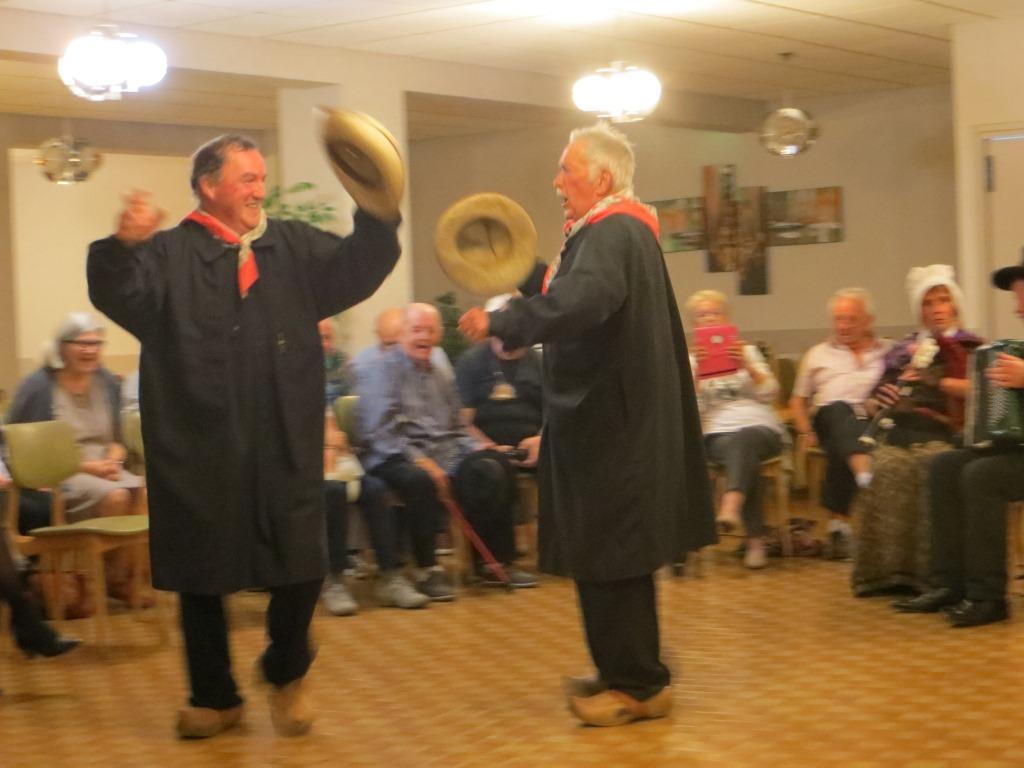
The bougnats were always a closely-knit, hard-working community and many of them made their fortune in Paris, often sending money to relatives back home. They were also firmly attached to their region of origin and kept alive their traditions and folklore through fêtes and dances, wearing their “peasant” dress of smocks, broad-brimmed hats and clogs. These friendly societies still exist today.

My latest novel, Overture, begins in the southwest département (county) of Aveyron in 1897. Two of the characters are bougnats who have already moved to Paris in search of their fortune, and have set up a restaurant, the Bistrot Mazars. Henri Mazars runs a coal delivery business, while his wife, Berthe, runs a restaurant, for which she has considerable ambitions. Some of the action takes place in and around the restaurant.
You might also like:
Fictional Versus Real Settings in Novels
Emma Calvé: Forgotten Singing Star of the Belle Epoque
Copyright © Vanessa Couchman 2019, all rights reserved.
 Vanessa Couchman
While perusing a collection of Robert Doisneau’s wonderful photos of Parisians this morning, I came across one depicting a rotund, jolly old fellow and his wife in a bistro captioned: “Monsieur et Madame Constant, bougnats rue de Seine, 1951”. Not being familiar with the term “bougnat”, my curiosity was piqued and so I went to my venerable (1951) Cassell’s French-English dictionary which defined Bougnat simply as “A small (and often dirty) retailer of charcoal and wine”. As you may imagine, there had to be more to M. et Mme Constant than that, so I looked online and found your superb article which thoroughly sated my craving for more knowledge of the bougnats – many thanks!!!
LikeLiked by 1 person
Thank you for commenting, Cristiana. I’m pleased to hear that you found my post about the bougnats helpful. It’s interesting that the nickname ‘bougnats’ has stuck for so long. They are still a cohesive group with a strong attachment to their rural roots.
I see you kindly signed up to receive notification of new posts, by the way. In fact, I don’t update this site anymore. You might be interested instead in my other blog about French life, culture and history, Life on La Lune, https://www.lifeonlalune.com.
LikeLike
Hi all, what do you think is the main reasons all Middleman minorities (such as the Bougnats), orientate towards Business? I see misery in the countryside, but other groups have been through tough conditions too, but didn’t orientate towards Business.
LikeLiked by 1 person
Thank you for your comment. I’m no expert on middleman minorities, so I can’t answer you in general terms. The Bougnats are interesting because when they moved from mountainous country areas to the city, they changed occupation quite radically. Having worked on the land, at first they took whatever employment they could get. For the early migrants, this included manual tasks such as carrying water or lighting street lamps. It was only later that they moved to being coal merchants (from which the Bougnat soubriquet originated) and bistrot owners.
It’s hard to say why they sought to enter commerce or how they managed to be so successful. Partly, perhaps, because they were a tight-knit group, and the tradition of helping one another was strong in the countryside. Partly because they felt they had a responsibility towards the folks back home. Many of them sent money back to their families. Partly, also, because people from these areas are strong-minded and proud (a generalisation, I know), and failure wasn’t in their mindset. That’s why they moved to Paris initially, anyway.
This is only speculation. I’m sure academic work has been done on the Bougnats which explains better than I can their motivations.
By the way, I don’t update this site anymore. I write another blog about French life, history and culture, http://www.lifeonlalune.com, where I sometimes write about such subjects. I’ve written about the Bougnats there, too.
LikeLike
Hi Vanessa, thanks a lot for your ‘non-expert’ response: it contains already a few hints that differentiate the Bougnats from other middleman minorities, I can work on. I wish you and your husband all the best luck in this wonderful retreat!
Stan
>
LikeLiked by 1 person
Thank you!
LikeLike
Reblogged this on Ocelot Press and commented:
In a series of posts about the historical background to Overture, to be published on 28th May, Vanessa Couchman looks at the exodus from rural SW France to Paris in the late 19th century.
LikeLike